
Before you can build a home on land without access to a municipal sewer system, you need to know if the ground can handle human waste. That’s exactly what a perc test tells you. It measures how quickly water drains through the soil, which determines whether a septic system can work on that specific parcel of land.
Without a passing perc test, most counties won’t issue a building permit. That makes this one of the most important — and most overlooked — steps in buying raw land.
Key Takeaways
- Perc test = soil drainage test — It measures how fast water absorbs into the ground to determine if a septic system can function properly.
- Required before building — Most counties require a passing perc test before issuing a building or septic system permit on land without sewer access.
- Costs range from $150 to $1,500 — Price depends on location, number of test holes, and whether a licensed engineer or soil scientist is required.
- Soil type determines results — Clay-heavy soils drain too slowly. Sandy or gravel-heavy soils can drain too fast. Loamy soils typically pass.
- Failing isn’t always final — Alternative septic systems, engineered systems, or choosing a different building site on the same parcel may still make the land usable.
- Test timing matters — Many counties require testing during specific seasons when soil moisture levels reflect typical conditions.
What Does a Perc Test Actually Measure?
Quick Answer: A perc test measures how fast water drains through soil in minutes per inch. This rate tells engineers whether the soil can absorb effluent from a septic system. A rate between 1 and 60 minutes per inch typically qualifies land for a standard septic system.
The word “perc” is short for percolation, which simply means the movement of liquid through a porous material. In this case, it’s water moving through soil layers below the surface.
A perc test gives you a number: the minutes it takes for water to drop one inch in a test hole. That number is called the percolation rate. Local health departments use this rate to decide what kind of septic system your land can support.
The test doesn’t just check for speed. It also reveals soil composition, depth to bedrock, and depth to the seasonal high water table. All three factors affect whether a septic drain field can operate safely without contaminating groundwater.
Why Soil Composition Changes Everything
Different soil types absorb water at very different rates. Clay soils absorb water slowly, which means effluent sits in the drain field too long and can back up or surface. Sandy soils absorb water quickly, but the water moves through before the soil can filter out harmful bacteria and nutrients.
Loamy soils, which contain a balanced mix of sand, silt, and clay, typically perform best. They absorb water at a moderate rate and provide enough filtration to treat wastewater before it reaches the groundwater table.
How Is a Perc Test Performed Step by Step?
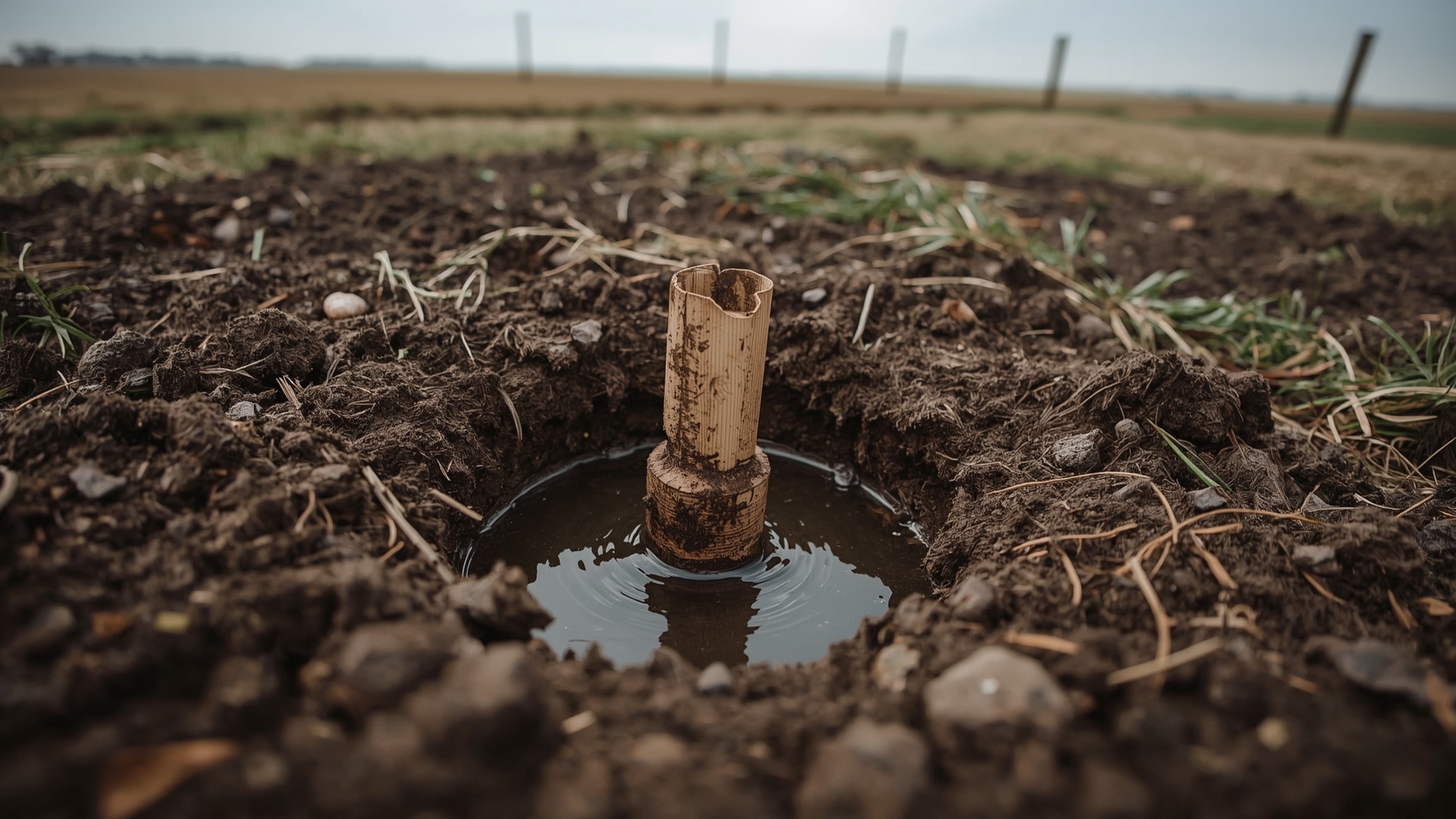
Quick Answer: A perc test involves digging 1-3 test holes, soaking them with water for 24 hours to saturate the soil, then timing how fast water drops one inch. A licensed professional or county health official oversees the process and records the results.
Step 1: Get County Approval to Test
Most counties require you to apply for a perc test permit before any digging starts. You’ll submit a site plan showing the property boundaries, proposed building location, and distance from wells and water sources. The county may assign an inspector to observe the test or require a licensed soil scientist to conduct it.
Step 2: Dig the Test Holes
A backhoe or hand auger creates test holes that are typically 6 to 12 inches in diameter and 12 to 36 inches deep. The number of holes depends on your county’s requirements and the size of the septic system you’re planning. Most tests use between one and three holes placed across the proposed drain field area.
Step 3: Pre-Soak the Soil
Water is poured into each hole and allowed to soak for a set period, usually 12 to 24 hours. This pre-soak step simulates saturated soil conditions, which is important because septic systems operate year-round — not just during dry weather.
Step 4: Run the Timed Test
After pre-soaking, water is added to a specific level inside the hole. The tester then records how many minutes it takes for the water level to drop one inch. This measurement is taken multiple times to get a consistent reading. The average across all readings becomes your official percolation rate.
Step 5: Record and Submit Results
Results go to the local health department or permitting office. In most jurisdictions, results are valid for one to five years, depending on state and county rules. If the test passes, you’ll receive documentation you can use to apply for a septic permit and, eventually, a building permit.
What Percolation Rate Passes or Fails a Perc Test?
Quick Answer: Most jurisdictions require a percolation rate between 1 and 60 minutes per inch for a standard septic system. Rates slower than 60 minutes per inch typically fail for conventional systems. Rates faster than 1 minute per inch may also fail due to insufficient filtration.
| Rate (Min/Inch) | Soil Type | Standard Septic Eligible | Notes |
|---|---|---|---|
| Less than 1 min/inch | Coarse gravel or fractured rock | No | Drains too fast; no filtration occurs |
| 1–5 min/inch | Sandy soil | Usually yes | May require larger drain field |
| 6–30 min/inch | Loamy soil | Yes | Ideal range for standard systems |
| 31–60 min/inch | Clay-loam mix | Marginal | May require engineered system |
| Over 60 min/inch | Heavy clay | No | Fails standard test; alternative systems needed |
These ranges are general. Your specific county may use slightly different cutoff values. Always confirm the acceptable range with your local health department before testing.
How Much Does a Perc Test Cost?
Quick Answer: A perc test costs between $150 and $1,500. Basic tests in rural counties cost $150 to $500. Complex tests requiring a licensed soil scientist or engineer on larger parcels range from $750 to $1,500. Excavation equipment rental adds $200 to $600.
| Cost Component | Low Range | High Range | Notes |
|---|---|---|---|
| County permit fee | $50 | $300 | Varies by jurisdiction |
| Soil scientist or engineer | $200 | $800 | Required in some states |
| Excavation (backhoe) | $200 | $600 | More holes = higher cost |
| Re-test fee (if failed) | $100 | $500 | Some counties allow one free retest |
| Full package (typical) | $300 | $1,500 | All-in for standard parcel |
Some sellers pay for the perc test before listing land. If a property is listed without perc test results, you should negotiate who covers the cost before signing a purchase agreement. Making your offer contingent on a passing perc test protects you from buying land you can’t build on.
Who Can Perform a Perc Test?
Quick Answer: Depending on the state, perc tests are performed by county health department officials, licensed soil scientists, certified engineers, or private testing companies approved by the local authority. Some counties require a licensed professional; others allow property owners to test with a county inspector present.
Licensed Soil Scientists
Soil scientists are trained to evaluate soil profiles across multiple layers, not just drainage speed. They identify soil horizons (distinct layers with different textures and composition), locate the seasonal high water table, and assess whether the soil can support a septic system long-term. Many states require a licensed soil scientist for any perc test that involves a new construction permit.
County Health Department Inspectors
In smaller or more rural counties, a county health inspector may conduct or observe the test themselves. This tends to be the lower-cost option, but scheduling availability can be limited. In some cases, inspectors only observe a test that you or a contractor set up, rather than conducting it themselves.
Private Engineering Firms
Private firms that specialize in site assessments often bundle perc testing with soil borings, topographic surveys, and septic system design. If you’re buying land for a development project, bundling these services can save time and reduce the number of mobilizations to the site.
What Factors Cause a Perc Test to Fail?
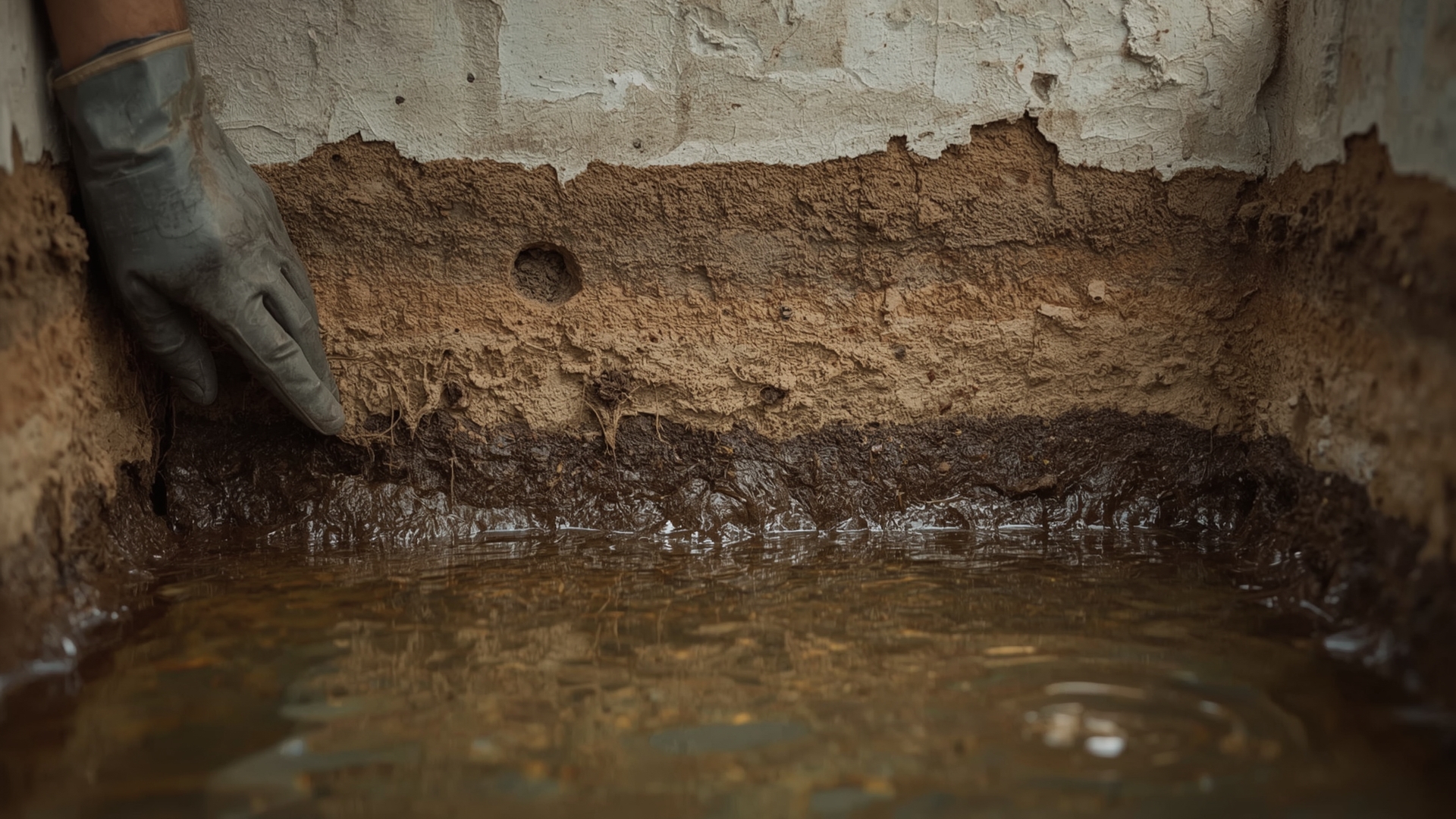
Quick Answer: A perc test fails when soil drains too slowly (over 60 min/inch), too quickly (under 1 min/inch), when bedrock is too shallow, or when the seasonal water table is too high. Clay soils, hardpan layers, and flood-prone areas are the most common failure causes.
| Failure Cause | Typical Soil/Condition | Impact on Septic System | Possible Fix |
|---|---|---|---|
| Slow drainage | Heavy clay soil | Effluent pools, surfaces, or backs up | Mound system or engineered system |
| Fast drainage | Coarse sand or gravel | Insufficient filtration before groundwater contact | Larger drain field, advanced treatment unit |
| Shallow bedrock | Rocky terrain | No room for drain field below surface | Limited; may require above-ground system |
| High water table | Low-lying or flood-prone land | Drain field saturated; system fails | Mound system elevated above water table |
| Hardpan layer | Compacted subsoil layer | Water perches above layer, won’t drain | Test at alternate location on parcel |
What Happens If Your Land Fails a Perc Test?
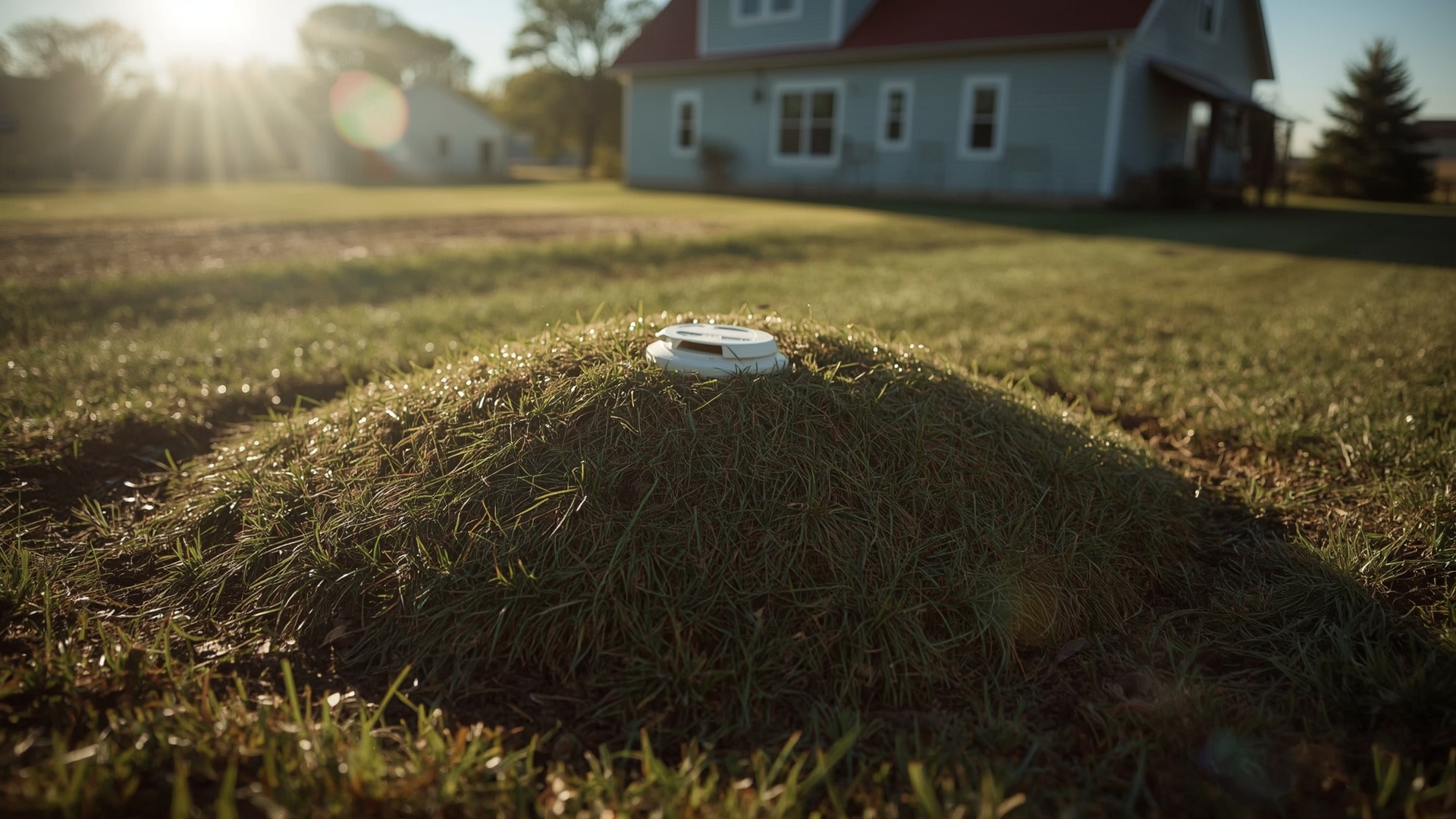
Quick Answer: Failing a perc test doesn’t automatically mean the land is unbuildable. Options include mound septic systems, alternative engineered systems, aerobic treatment units, composting toilets, or retesting on a different area of the parcel. Consult a licensed soil scientist before giving up.
Mound Septic Systems
A mound system elevates the drain field above the natural ground surface using imported soil. This is the most common solution when native soil drains too slowly or the water table is too high. Mound systems cost more than conventional systems, typically $10,000 to $25,000 installed, but they allow construction on land that would otherwise fail a standard perc test.
Aerobic Treatment Units (ATUs)
An aerobic treatment unit, or ATU, injects oxygen into the wastewater treatment process. This breaks down waste more thoroughly before it enters the drain field, which means the soil doesn’t need to work as hard. ATUs are approved in most states for challenging soil conditions and can be used with a smaller or modified drain field.
Engineered Septic Systems
A licensed engineer can design a custom septic system tailored to your site’s specific soil conditions. These designs may involve drip irrigation drain fields, low-pressure pipe systems, or phased dosing systems. Engineered systems are more expensive upfront, usually $15,000 to $40,000, but they’re often the only path forward on difficult parcels.
Retesting in a Different Location
Soil conditions vary across a single parcel. The area near a seasonal drainage channel may fail while a higher elevation on the same property passes. Before abandoning land after a failed test, hire a soil scientist to evaluate other potential drain field locations on the parcel.
Connection to Municipal Sewer
If the land is near a public sewer line, connecting to it eliminates the need for a septic system entirely. Check with your local utility district to determine if a sewer connection is available and what the tap fee and extension costs would be. This option is only realistic if the property is within a few hundred feet of an existing sewer main.
When Should You Order a Perc Test?
Quick Answer: Order a perc test before closing on raw land, ideally during the due diligence period. Make the land purchase contingent on passing results. Many counties restrict testing to specific seasons, typically spring or fall, when soil moisture reflects normal conditions.
Scheduling is often the most underestimated part of the perc test process. County inspectors may have a wait time of two to six weeks, especially in spring. If your due diligence window is only 30 days, you need to schedule the test immediately after signing the purchase agreement.
Some counties only permit perc testing during defined seasonal windows. Testing during dry summer months may be prohibited because results won’t reflect how the soil behaves when wet. Ask the county health department about testing seasons before you finalize your purchase timeline.
Does Every Property Need a Perc Test?
Quick Answer: No. Properties with access to a municipal sewer system don’t need a perc test. Properties in areas where septic systems are already approved and documented may also be exempt. However, any land where a new septic system must be installed almost always requires one.
If you’re buying land in a rural area with no sewer service, assume a perc test is required. If you’re buying a lot in a subdivision, check whether the developer already conducted subdivision-wide soil testing. In many planned developments, perc tests are done before lots are sold, and results are available through the developer or the county.
Existing homes with functioning septic systems on record may not require a new perc test unless the system needs to be replaced or expanded. Verify the system’s current status and permit history with the county before assuming it’s compliant.
How Does a Perc Test Relate to a Full Septic Feasibility Study?
Quick Answer: A perc test is one component of a septic feasibility study. The full study also includes soil borings to identify soil horizons, water table depth measurements, setback distance reviews, and a site layout showing where the system can legally and physically be placed.
A perc test gives you one data point: how fast water drains at a specific location and depth. A septic feasibility study gives you a complete picture. It tells you whether a system can be built, what type of system is appropriate, how large it needs to be, and whether the site layout has room for both the primary drain field and a required reserve area.
Most counties require a reserve drain field area equal to 100% of the primary drain field. This means you need twice the usable area you might expect. On small parcels, this can be the deciding factor in whether a system is feasible at all.
| Component | Perc Test | Full Feasibility Study |
|---|---|---|
| Soil drainage rate | Yes | Yes |
| Soil horizon analysis | Sometimes | Yes |
| Water table depth | No | Yes |
| Setback compliance review | No | Yes |
| System type recommendation | No | Yes |
| Reserve field area mapped | No | Yes |
| Cost | $150–$1,500 | $800–$3,500 |
If you’re seriously considering buying raw land for residential development, spending the extra money on a full feasibility study upfront often prevents far larger costs later.
What Should You Do Before Buying Land That Needs a Perc Test?

Quick Answer: Before buying, request any existing perc test records from the county, include a perc test contingency in your purchase offer, confirm seasonal testing windows, and hire a licensed soil scientist to evaluate the site before the test. This prevents buying land you can’t use.
Request Existing Records First
Contact the county health department and ask if any soil tests or septic permits have ever been issued for the parcel. Previous test records can save you the cost of retesting and tell you upfront whether the land has challenges.
Add a Contingency to Your Offer
Your purchase offer should state that closing is contingent on the land passing a perc test or receiving a septic permit. This protects your earnest money if the land fails. Without this contingency, you may be legally obligated to close on land with no septic solution.
Talk to Neighbors
Neighbors on adjacent parcels can tell you a lot. Ask whether they have a septic system, what type it is, and whether they had any challenges getting it permitted. If every surrounding property uses a mound system, that’s a strong signal about what your land will require too.
Review the Soil Survey
The USDA Natural Resources Conservation Service (NRCS) publishes Web Soil Survey, a free online tool that shows mapped soil types for any parcel in the United States. While it’s not a substitute for on-site testing, it gives you a preliminary read on whether the soil type in a given area is historically problematic for septic systems.
Frequently Asked Questions
How long does a perc test take to complete?
The on-site portion of a perc test usually takes one to two days. The pre-soak phase alone requires 12 to 24 hours. After that, the timed drainage measurements take two to four hours. Add in scheduling time with the county and you’re typically looking at two to six weeks from application to results.
Can a perc test be done in winter?
Most counties prohibit perc testing when the ground is frozen. Frozen soil doesn’t reflect normal drainage conditions, so test results would be inaccurate. Check with your local health department for approved testing windows. In many northern states, spring and fall are the only permitted testing seasons.
Who owns the perc test results?
Results are typically filed with the county health department and tied to the parcel, not the person who ordered the test. If a previous owner tested the land, those records are usually public and accessible. Always check the county records before paying for a new test.
Does a perc test guarantee I can build?
No. A passing perc test means the soil can support a septic system. You still need to clear zoning requirements, setback rules, well placement approvals, and building permit requirements. The perc test is one piece of the overall land development approval process.
Can I do a perc test myself?
In some counties, a property owner can dig the test holes and conduct the basic measurements, as long as a county inspector observes or certifies the results. However, many states require a licensed soil scientist or certified engineer to conduct and sign off on the test. Check your county’s specific requirements before attempting a DIY test.
What is a mound septic system and when is it required?
A mound system is a type of septic system built above the ground surface using sand fill and engineered soil layers. It’s used when the native soil drains too slowly, the water table is too close to the surface, or bedrock prevents a conventional in-ground drain field. Costs typically range from $10,000 to $25,000, compared to $3,000 to $8,000 for a conventional system.