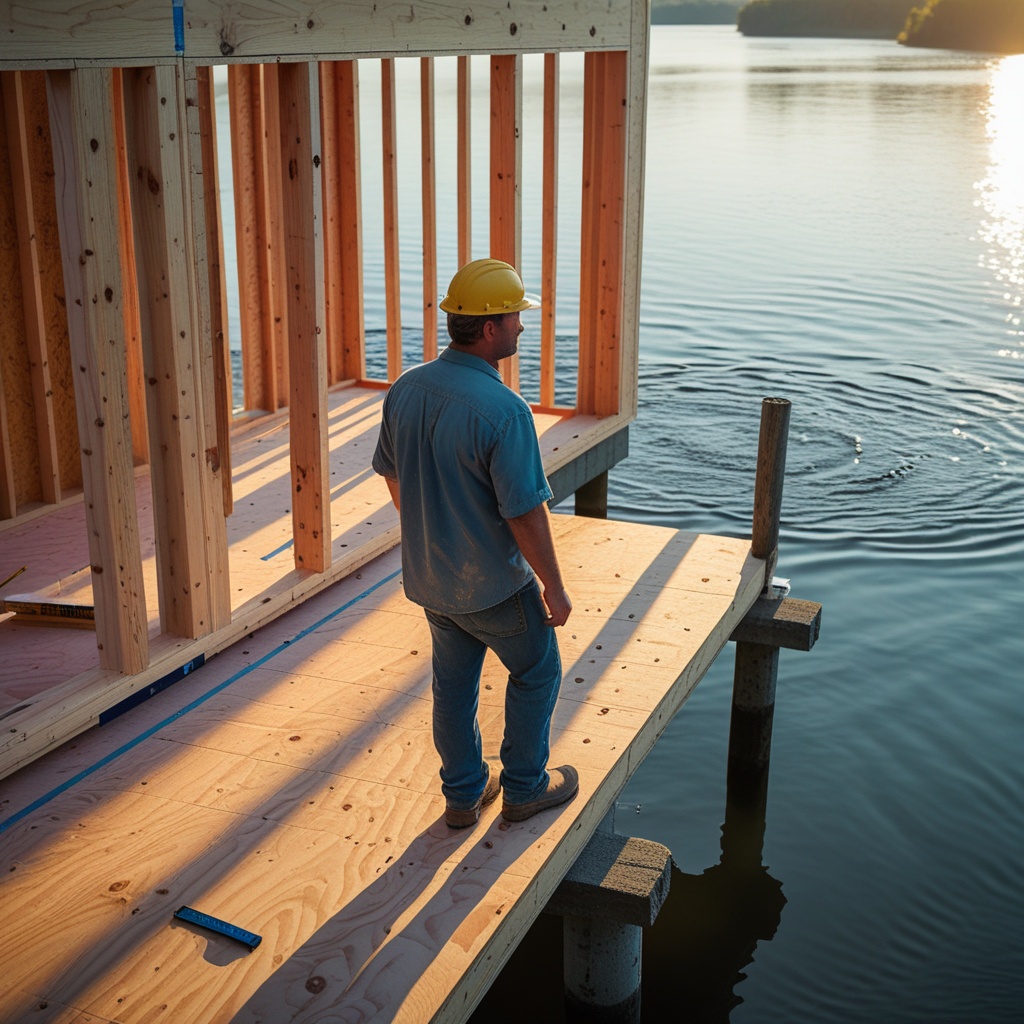
Buying riverfront property in Titusville, Florida requires securing financing or cash, verifying flood and environmental zoning, ordering a survey and title search, and closing through a licensed real estate attorney or title company. The entire process typically runs 30 to 60 days for cash purchases and 45 to 75 days when financing is involved. Titusville sits directly on the Indian River Lagoon, one of the most biologically diverse estuaries in North America, which means buyers face additional review steps that inland Brevard County purchases do not require.
Vacant riverfront lots in the Titusville area currently list in a wide range, generally between $90,000 and $450,000 depending on lot width, water depth, and whether the parcel includes an existing dock or seawall. That spread matters because a narrow lagoon-front lot without deeded water access sells at a very different price point than a wide parcel with a private boat slip and unobstructed sunrise views over the river. Understanding each stage of the purchase, from budgeting through closing, prevents costly surprises tied to setbacks, flood insurance, and septic approval.
Key Takeaways
- Riverfront lots in Titusville generally range from $90,000 to $450,000, with price driven heavily by water frontage width and dock or seawall condition.
- Most riverfront parcels sit in FEMA flood zones AE or VE, which affects insurance costs and construction requirements before you even break ground.
- Brevard County typically requires a 25-foot to 50-foot setback from the mean high-water line, though exact figures depend on the specific zoning district.
- A full title search, survey, and environmental review should be completed before the end of your due diligence period, usually 15 to 30 days after contract signing.
- Closing costs on vacant land in Florida typically run 2% to 5% of the purchase price, split between buyer and seller obligations.
- Septic and well permitting through the Brevard County Health Department can take 4 to 8 weeks and should be confirmed before waiving contingencies.
How Much Does Riverfront Property Cost in Titusville?
Riverfront and lagoon-front vacant lots in Titusville commonly sell between $90,000 and $450,000, with the median falling closer to $175,000 for standard 75-to-100-foot-wide parcels. Larger estates with 150 feet or more of water frontage, especially those with existing seawalls or boat lifts, regularly exceed $500,000. Price per linear foot of water frontage (often $1,500 to $4,000 along the Indian River Lagoon) is a more useful comparison than price per acre, since lot depth can vary by 100 feet or more from block to block.
Flood zone status, seawall condition, and lot depth can swing the price by 20 to 40 percent beyond simple frontage width. A parcel with an existing seawall in good condition can add $30,000 to $75,000 in value compared to a raw, unbulkheaded shoreline, since seawall construction alone often costs $400 to $700 per linear foot to install today. Elevation also matters. Lots sitting above the base flood elevation reduce future insurance costs and grading expenses, which buyers increasingly factor into their offers according to the Florida Realtors Association’s annual coastal property trends report.
What Are the Steps to Buying Vacant Riverfront Land in Titusville?
Buying vacant riverfront land follows a more technical path than purchasing an existing home, since there is no structure to inspect and far more emphasis on soil, flood, and access verification. The following numbered sequence reflects the order most successful Titusville land purchases actually follow.
- Set your budget and get pre-qualified. Land loans typically require a 20% to 35% down payment, higher than the 5% to 20% common for homes, so confirm your lender’s terms before touring lots.
- Identify target parcels and confirm water frontage. Review the vacant riverfront parcels referenced throughout this process to compare lot width, depth, and existing improvements side by side.
- Submit an offer with a due diligence contingency. Most Titusville land contracts allow 15 to 30 days for inspections, survey review, and environmental checks before the deposit becomes non-refundable.
- Order a boundary and topographic survey. A licensed Florida surveyor typically charges $1,500 to $3,500 for a riverfront parcel, more than an inland lot, because mean high-water line determination adds time and complexity.
- Verify flood zone and elevation certificates. Pull the FEMA flood map designation and, if available, request an elevation certificate to estimate future flood insurance premiums.
- Check septic and well feasibility with Brevard County. The county’s Environmental Health Division reviews soil percolation and setback compliance, a process that generally takes 4 to 8 weeks.
- Order a title search and title insurance commitment. This step uncovers liens, easements, or riparian rights disputes that are more common on waterfront parcels than inland ones.
- Close through an attorney or licensed title company. Florida does not require attorney-led closings, but many riverfront buyers choose one given the added complexity of water rights and permits.
Skipping the survey or environmental review to save time is one of the most expensive mistakes a land buyer can make on the Indian River Lagoon, since correcting a setback violation after purchase can cost far more than the inspection itself.
What Flood Zone and Environmental Rules Apply to Titusville Riverfront Lots?
Most riverfront parcels along the Indian River Lagoon in Titusville fall within FEMA flood zones AE or VE, both of which carry mandatory flood insurance requirements for any financed structure. Zone VE, the higher-risk coastal high hazard designation, applies to lots directly exposed to wave action and typically requires elevated pile construction, which adds $15,000 to $40,000 to building costs compared to a standard slab foundation. Zone AE, more common on the calmer lagoon-front lots north and south of downtown Titusville, still requires flood insurance but generally allows more conventional foundation types.
Because the Indian River Lagoon is a designated Aquatic Preserve under Florida law, any dock, seawall, or shoreline alteration typically requires a permit from the Florida Department of Environmental Protection, and projects extending into navigable waters may also need review from the U.S. Army Corps of Engineers. Buyers planning to build a new dock should budget 60 to 120 days for permit approval and should confirm with the seller whether an existing structure already carries valid, transferable permits. According to the St. Johns River Water Management District, seagrass protection zones along portions of the lagoon add further restrictions on dredging and shoreline clearing, so a pre-purchase call to the district’s regulatory office is worth the time.
What Setback Distances Apply to Riverfront Construction?
Brevard County generally requires a setback of 25 to 50 feet from the mean high-water line before any permanent structure can be built, though the exact figure depends on the specific zoning classification and whether the parcel sits within a Coastal Construction Control Line. Some older platted lots in Titusville’s historic riverfront neighborhoods carry legal nonconforming status, meaning a smaller setback may be grandfathered in, but this must be confirmed in writing with the county’s Natural Resources Management Department before you rely on it. A licensed land surveyor can mark the current mean high-water line on your survey, which becomes the reference point for every setback calculation that follows.
How Do You Verify Water Access, Riparian Rights, and Boundaries?
Riparian rights in Florida attach to the land itself and generally include the right to access the water, build a dock (subject to permitting), and use the water frontage bordering your property, but these rights do not automatically include ownership of the submerged land beyond the mean high-water line, which typically remains state-owned sovereign submerged land. Confirming exactly where your legal boundary ends and the state’s begins is one of the most important tasks a title search and survey accomplish together.
A comparison of the two core documents shows why both matter:
- Boundary survey: Confirms the physical lot lines, water frontage width, and mean high-water line location, typically costing $1,500 to $3,500 and taking 2 to 4 weeks to complete.
- Title search and insurance commitment: Confirms legal ownership history, existing liens, recorded easements, and any riparian rights disputes, typically costing $150 to $400 for the search and 0.5% to 1% of purchase price for the insurance policy itself.
Buyers should also ask directly whether any portion of the parcel has been affected by erosion or accretion since the last recorded survey, since Florida’s legal doctrine on shifting shorelines can quietly change a lot’s usable footprint over time.
What Financing Options Work Best for Riverfront Land Purchases?
Cash remains the most common way riverfront vacant land changes hands in Titusville, largely because conventional mortgage lenders are often reluctant to finance raw land without a construction timeline attached. When financing is used, buyers typically choose one of three paths.
- Raw land loan: Requires 30% to 35% down, carries interest rates roughly 1 to 2 percentage points above a standard mortgage rate, and usually runs a 15-to-20-year term.
- Construction-to-permanent loan: Requires 20% to 25% down if a build is planned within 12 months, and converts to a standard mortgage once construction finishes.
- Seller or portfolio financing: Some Titusville landowners offer owner financing with 15% to 25% down, which can be attractive when a buyer’s construction plans are still undefined.
Regardless of financing type, lenders will almost always require flood zone documentation and, in VE zones, an elevation certificate before final approval, so gathering these documents early shortens the underwriting timeline considerably.
What Closing Costs Should You Expect on a Titusville Riverfront Purchase?
Total closing costs on vacant land in Florida generally run 2% to 5% of the purchase price, though the exact split between buyer and seller is negotiable and varies by contract. On a $200,000 riverfront lot, that translates to roughly $4,000 to $10,000 in combined fees.
- Title insurance and search: approximately $150 to $400 for the search plus 0.5% to 1% of the purchase price for the policy premium.
- Documentary stamp tax on the deed: $0.70 per $100 of purchase price in most Florida counties, including Brevard.
- Survey fee: $1,500 to $3,500 for a riverfront parcel with mean high-water line determination.
- Recording fees: typically $10 for the first page and $8.50 for each additional page recorded with the Brevard County Clerk of Courts.
- Attorney or closing agent fee: $500 to $1,500 depending on the complexity of riparian rights review.
Property taxes in Brevard County are prorated at closing based on the county’s current millage rate, which typically produces an effective tax rate around 0.8% to 1.1% of assessed value for waterfront parcels, though assessed value on vacant land is often lower than eventual post-construction assessments.
Should You Hire a Local Real Estate Agent or Attorney?
A local agent who specializes in Titusville waterfront transactions brings direct familiarity with which stretches of the Indian River Lagoon have shallow versus deep water access, which matters enormously for anyone planning to keep a boat. An attorney, meanwhile, becomes especially valuable when a parcel’s riparian rights, easements, or seawall permits carry any ambiguity in the public record. Many buyers use both: an agent to identify and negotiate the deal, and an attorney or title company to handle the closing itself.
If you are already reviewing a specific parcel and want a clearer sense of the permitting and title steps ahead of you, it is worth reaching out early rather than waiting until under contract. You can get help navigating closing and title steps for your parcel before you submit an offer, which often uncovers issues while there is still time to negotiate price or request repairs to an existing seawall.
Frequently Asked Questions
How long does it take to close on vacant riverfront land in Titusville?
Cash purchases typically close in 30 to 45 days, while financed purchases take 45 to 75 days. The timeline depends heavily on survey turnaround, title search results, and how quickly the Brevard County Health Department clears septic feasibility if the lot lacks municipal sewer access.
Do all riverfront lots in Titusville require flood insurance?
Any parcel in FEMA flood zone AE or VE requires flood insurance once a structure is financed with a federally backed mortgage. Cash buyers are not legally required to carry flood insurance, though most insurance advisors strongly recommend it given the lagoon’s exposure to storm surge during hurricane season.
Can you build a dock on any riverfront lot in Titusville?
Not automatically. Dock construction requires a permit from the Florida Department of Environmental Protection and sometimes the U.S. Army Corps of Engineers. Approval depends on water depth, seagrass presence, and whether the proposed dock extends beyond standard length limits set for the Indian River Lagoon Aquatic Preserve.
What is the difference between riverfront and lagoon-front property in Titusville?
In practical terms, most “riverfront” listings in Titusville actually border the Indian River Lagoon rather than a flowing river channel. The distinction affects water depth, boat access, and insurance classification, so buyers should confirm the specific body of water and its navigability before assuming deep-water access.
Is septic required on Titusville riverfront lots, or is sewer available?
It depends on the specific parcel; some riverfront lots have municipal sewer access while others require a septic system approved by the Brevard County Health Department. Septic approval hinges on soil percolation testing and setback distance from the water, a process that generally takes 4 to 8 weeks and should be confirmed before removing financing or inspection contingencies.
Conclusion
Purchasing riverfront property in Titusville rewards buyers who move through due diligence methodically rather than rushing to close. Confirming flood zone status, setback distances, and riparian rights before waiving contingencies protects you from expensive surprises after the deed is recorded. With typical closing timelines of 30 to 75 days and closing costs running 2% to 5% of purchase price, a well-prepared buyer can move from initial offer to ownership of a genuine Indian River Lagoon parcel with confidence and a clear understanding of what comes next.